

Maximizing Ad Yield: How Rich Contextual Video Signals Transform Your Existing Tech Stack


The streaming landscape has a transparency problem. While advertisers are desperate to move away from third-party cookies, they often find themselves buying video inventory that is essentially a black box. Despite the premium nature of CTV and digital video, many publishers are still sending basic metadata tags that offer little more than a title or a general category. This lack of detail leads to missed revenue opportunities and hesitant buyers who fear their ads might appear alongside unsuitable content. The challenge is moving that data into your existing pipes without tearing down your entire infrastructure.
By bridging the gap between deep content analysis and your current ad delivery systems, publishers can unlock premium pricing and deeper buyer trust. Read on to learn how to inject sophisticated metadata into your ad server and SSPs to turn every impression into a high-value, transparent opportunity.
Bridging the Ad Server Metadata Gap
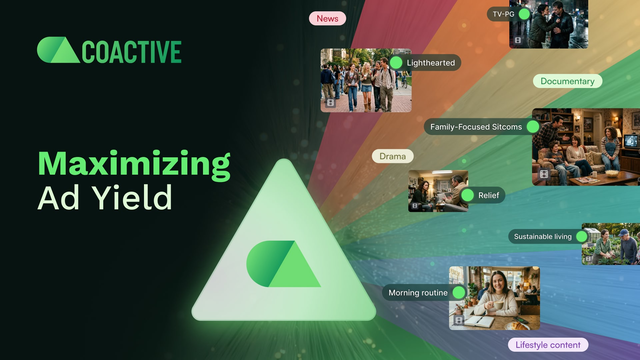
Most publishers rely on an ad server like Google Ad Manager or FreeWheel to manage their direct and programmatic business. However, these servers are only as smart as the information they receive. When you extract deeper contextual video signals—such as the specific mood, subject matter, or maturity rating of an episode—you can map these directly to line-item targeting keys. Instead of just selling "Comedy," you can sell "Lighthearted, TV-PG, Family-Focused Sitcoms."
Suitability and Granular Targeting
Beyond simple genres, suitability labels are becoming the gold standard for advertisers. Modern contextual AI uses sentiment analysis and computer vision to prove "suitability" rather than just "safety." By selling moments rather than just shows, publishers can package brand suitable, disparate content into a single high-intent buy. A "Sustainable Living" package might now include specific scenes from news, documentaries, and dramas, maximizing your fill rate across the entire library. This allows for surgical precision in ad placement, ensuring that a high-end luxury brand appears during a "sophisticated, high-drama" moment.
Actionable Steps to Enable Programmatic Deal Curation
The programmatic world operates on standardized protocols, primarily OpenRTB. To capture higher CPMs in the open market and through Private Marketplaces (PMPs), you must populate the OpenRTB content object and its extensions with your specific taxonomy IDs. When your SSPs receive these enriched contextual video signals, they can broadcast the true value of your inventory to Demand Side Platforms (DSPs), making your traffic stand out in a crowded bid stream.
Turning Data into Curated PMPs
Consider a publisher that wants to increase sell-through for their long tail content. By using detailed content profiles, they can generate curated PMPs with themes like "Family-Safe Comedy: 30-minute, TV-PG, US Primetime." These bundles are then passed to the SSP. Because the buyer knows exactly what the environment looks like, they are willing to pay a premium compared to broad “run of network” buys where ads run across a publisher’s entire network of sites, apps, or channels. Presenting targeted, defendable content to advertisers transforms dormant archives into highly sought-after, brand-safe inventory.
Integrating Intelligence Without Replacing Your SSAI
One of the biggest misconceptions in ad tech is that improving your data requires a total "rip and replace" of your Server-Side Ad Insertion (SSAI) or ad server. In reality, you can enhance your stack through simple adapters and middleware. A session hook or SSAI plugin can fetch a comprehensive content profile at the start of a session and attach those details directly to the ad calls. This ensures that every request leaving your system is bolstered by the most accurate contextual video signals available.
How Coactive Can Help
Modernizing your advertising strategy starts with tighter alignment between your video content and the systems that deliver and monetize it. This means moving beyond static metadata toward dynamic, real-time tagging, where signals about mood, context, and suitability are continuously generated and passed through your ad stack. By exporting richer metadata to your ad server, populating OpenRTB objects for your SSPs, and using session-level hooks to activate these dynamic tags in real time, you create a transparent, data-rich environment that buyers increasingly expect.
Coactive makes this transition seamless by analyzing your video at scale and turning it into a stream of granular, dynamic signals, from sentiment and tone to brand suitability and contextual relevance. These tags do more than describe your content. They actively inform decisioning in the moment, enabling more precise targeting, improved yield, and higher-value transactions.
The result is a future-ready monetization strategy that is privacy-first, context-driven, and designed to maximize the ROI of your existing content library.
Learn how to put metadata and taxonomies to work to improve contextual advertising in this datasheet, “Optimize Contextual Advertising with Multimodal AI.”
.webp)