En cliquant sur « Accepter tous les cookies », vous acceptez le stockage de cookies sur votre appareil afin d'améliorer la navigation sur le site, d'analyser l'utilisation du site et de contribuer à nos efforts de marketing. Voir notre Politique de confidentialité pour de plus amples renseignements.
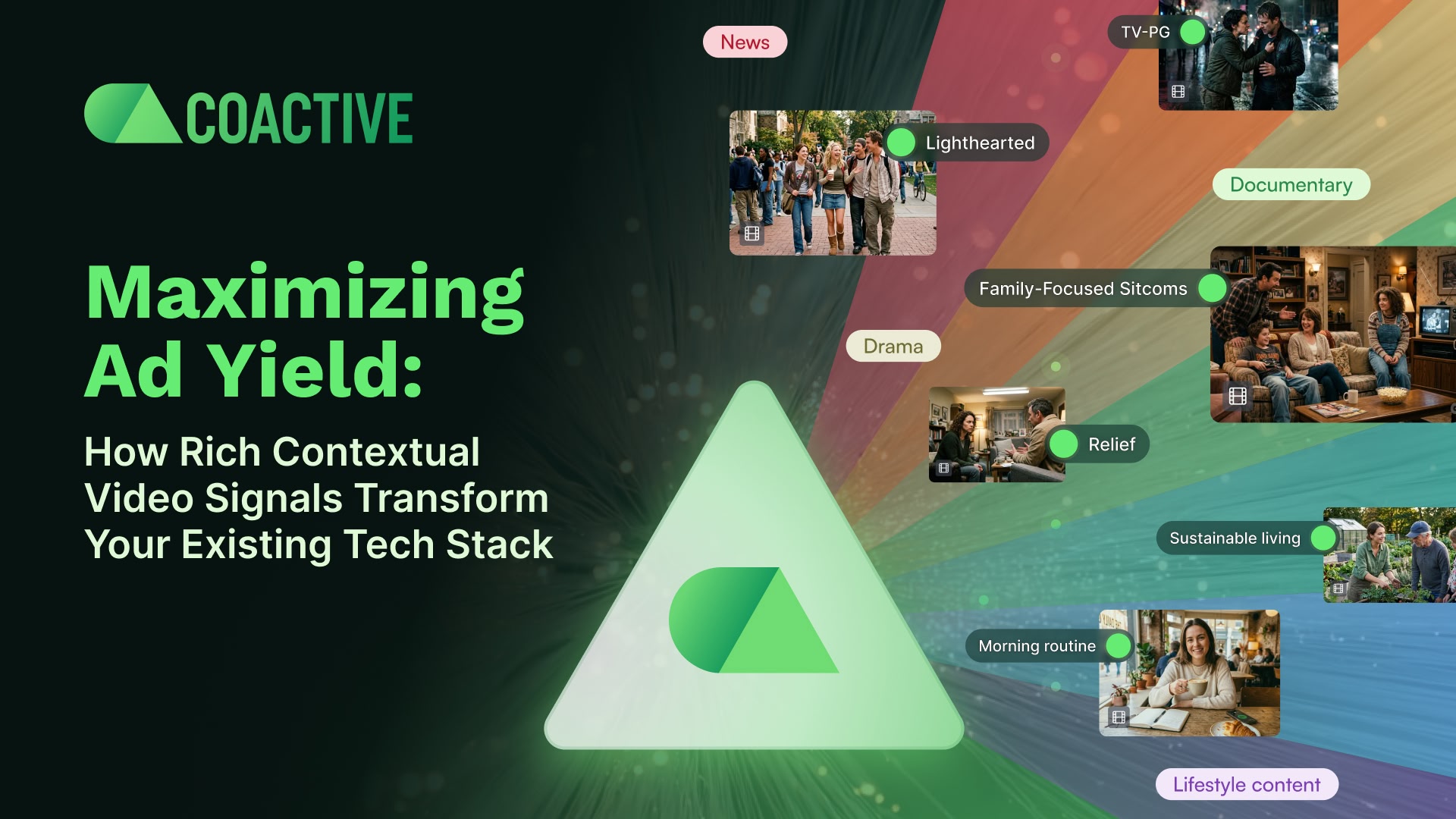
Dynamic Tags is an intent-based classification system. You define the ideas that matter to your business. The platform learns what those ideas look like across visual imagery and spoken dialogue, and scores every moment in your library. The result is Contextual Intelligence that you own, refine, and deploy.
Automatically tag content across video, image, and audio assets.
Structure and enrich content libraries to power personalization and recommendations, and to improve content discoverability for end users.
Smarter tags using multimodal signals
Generate precise, context-aware tags from both visual and signals.
Accelerate and streamline tag creation
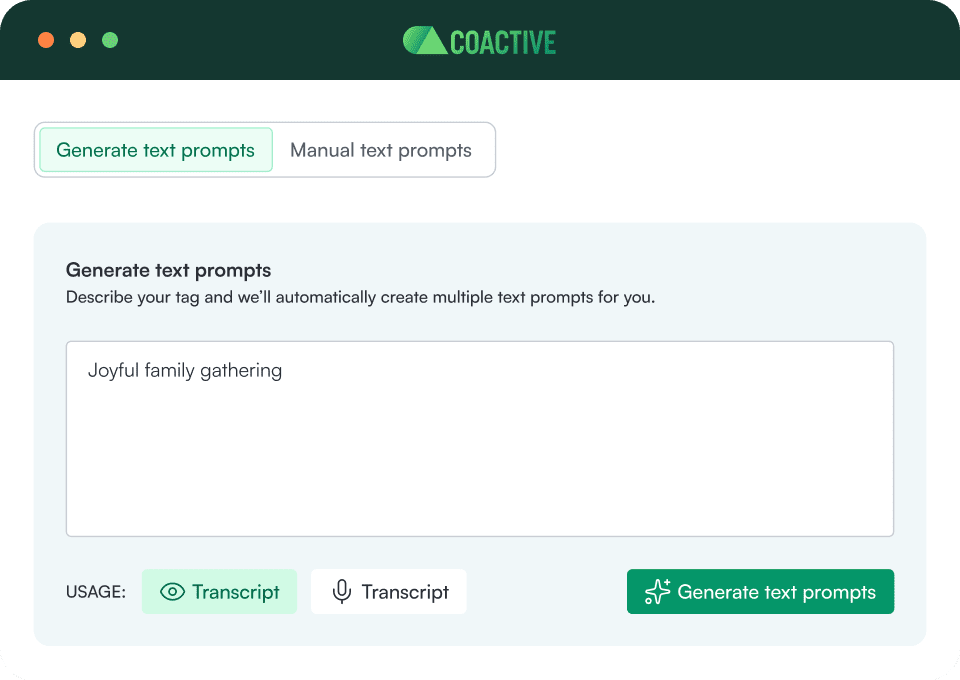
Speed up tag creation with LLM powered prompt suggestions, shot-level previews, and threshold tuning.
Easily validate tag accuracy
Auto-generate evaluation data (ground truth) with LLMs—no manual labeling needed.
Tag once, apply multiple times
Save time and reduce costs when you reuse your refined taxonomy across datasets. Get unlimited fine-tuning, with no per-run fees.
The Problem
Standard taxonomies describe content. They don't understand yours.
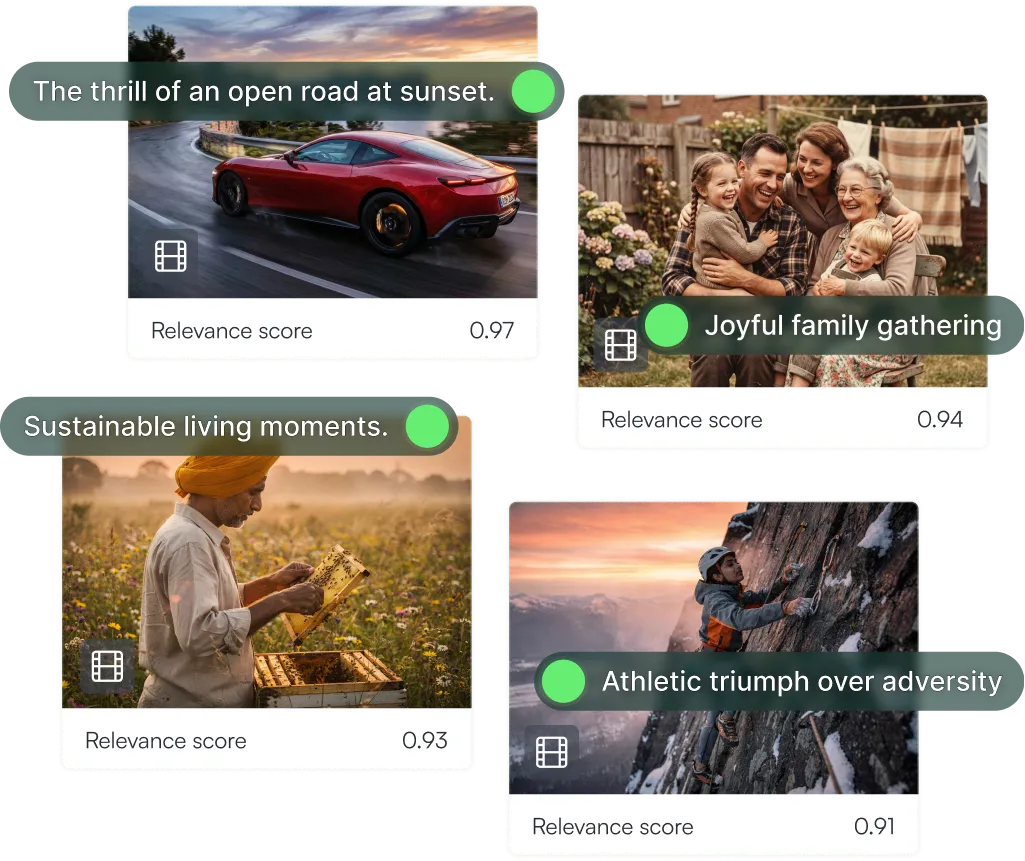
Industry taxonomies like IAB categories are useful starting points. They can tell you a video contains "sports" or "automotive." What they cannot tell you is whether a specific moment captures "athletic triumph over adversity" or "the thrill of an open road at sunset." The gap between generic classification and the intent behind an advertiser's brief, a publisher's editorial voice, or a brand's standards is where targeting breaks down and value gets lost.
Every organization has its own language for content. Dynamic Tags lets you teach the platform that language.
What Dynamic Tags Does
Your taxonomy. Your definitions. Scored across every moment.
Dynamic Tags turns the ideas in your head into structured, measurable intelligence across your content library.
You define tags using natural language descriptions and visual examples. The platform scores each moment in your entire content library against those definitions, working across both visual imagery and transcript signals simultaneously. An iterative workflow lets you refine: preview results, adjust your definitions, validate accuracy, and deploy when you're confident.
Key capabilities:
Multimodal classification
Tags score content across visual and transcript signals working together. A tag for "cooking" can match both the sight of a chef in a kitchen and dialogue about preparing a meal. You control which signals matter for each tag.
Video-level and scene-level tagging
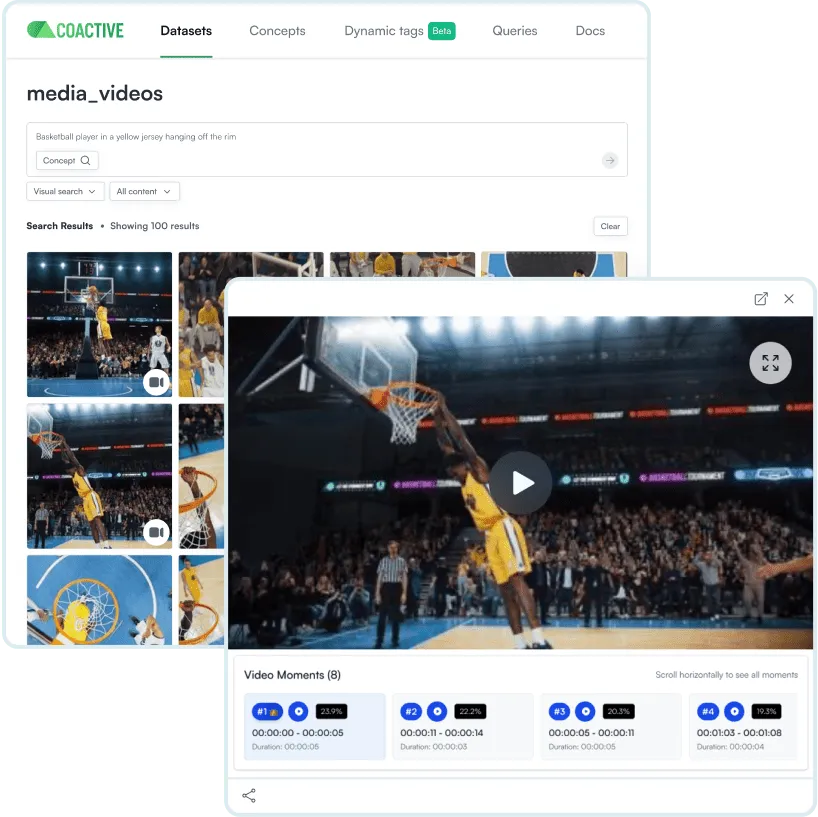
Score content at the granularity that matches your use case. Video-level tagging classifies entire assets. Scene-level intelligence can map to any definition of segmentation (minute-by-minute, between ad breaks, or any other). Both enable users to define what "match" means based on a variety of fine-tuned controls.
IAB and GARM taxonomy support
Standard taxonomy classifications are available for teams that need industry-standard content categories and brand suitability signals alongside their custom tags.
Iterative refinement
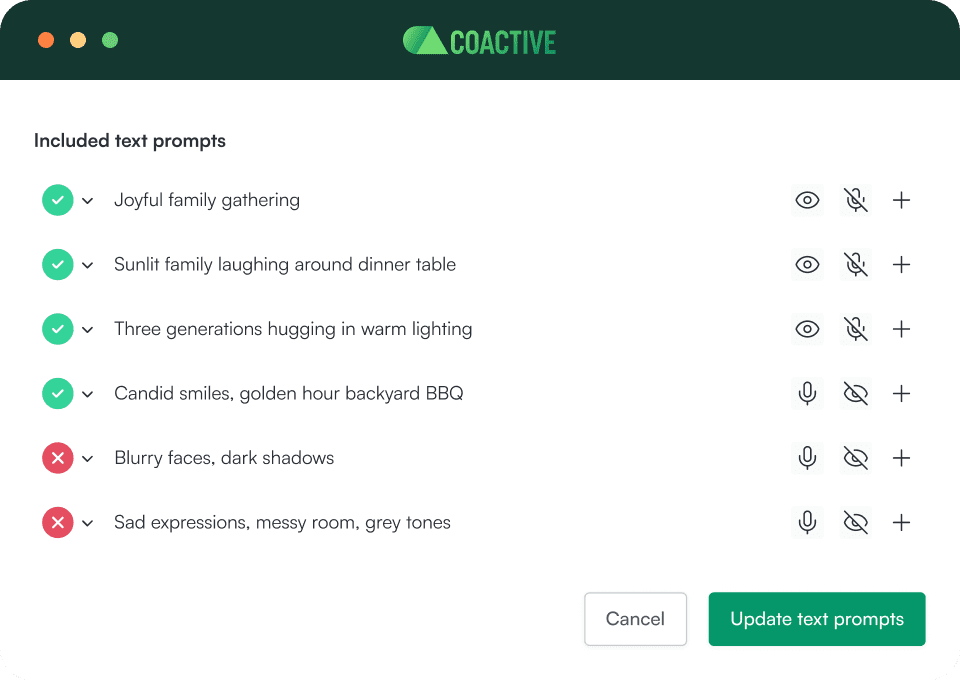
Define tags with text prompts and visual examples. Preview how the platform interprets your definitions. Refine using positive and negative prompts, LLM-assisted prompt suggestions, and visual feedback.
Portable across datasets
Tag definitions created on one dataset can be applied to other datasets within your organization. Define once, deploy everywhere.
Key capabilities:
01
Multimodal classification
Tags score content across visual and transcript signals working together. A tag for "cooking" can match both the sight of a chef in a kitchen and dialogue about preparing a meal. You control which signals matter for each tag.
02
Video-level and scene-level tagging
Score content at the granularity that matches your use case. Video-level tagging classifies entire assets. Scene-level intelligence can map to any definition of segmentation (minute-by-minute, between ad breaks, or any other). Both enable users to define what "match" means based on a variety of fine-tuned controls.
03
IAB and GARM taxonomy support
Standard taxonomy classifications are available for teams that need industry-standard content categories and brand suitability signals alongside their custom tags.
04
Iterative refinement
Define tags with text prompts and visual examples. Preview how the platform interprets your definitions. Refine using positive and negative prompts, LLM-assisted prompt suggestions, and visual feedback.
05
Portable across datasets
Tag definitions created on one dataset can be applied to other datasets within your organization. Define once, deploy everywhere.
HOW TO TURN INTENT INTO TAGS
From idea to intelligence, in minutes.
No spreadsheets. No ML team. No waiting weeks for results, the campaign has already moved on from.
Describe any concept in natural language. "Joyful family gathering." "Sustainable living moments." "High-energy outdoor adventure." The platform scores every moment in your library against your definition.
Every organization's language for content is different. A publisher builds one taxonomy for their catalog. An advertiser defines context per brief. A content ops team classifies by editorial standards. The system learns each one.
When you're ready, deploy.Publish your tags and score your full content library. Results land in structured, SQL-queryable tables ready for analysis, export, or activation through Context Studio.
Step 2: Review
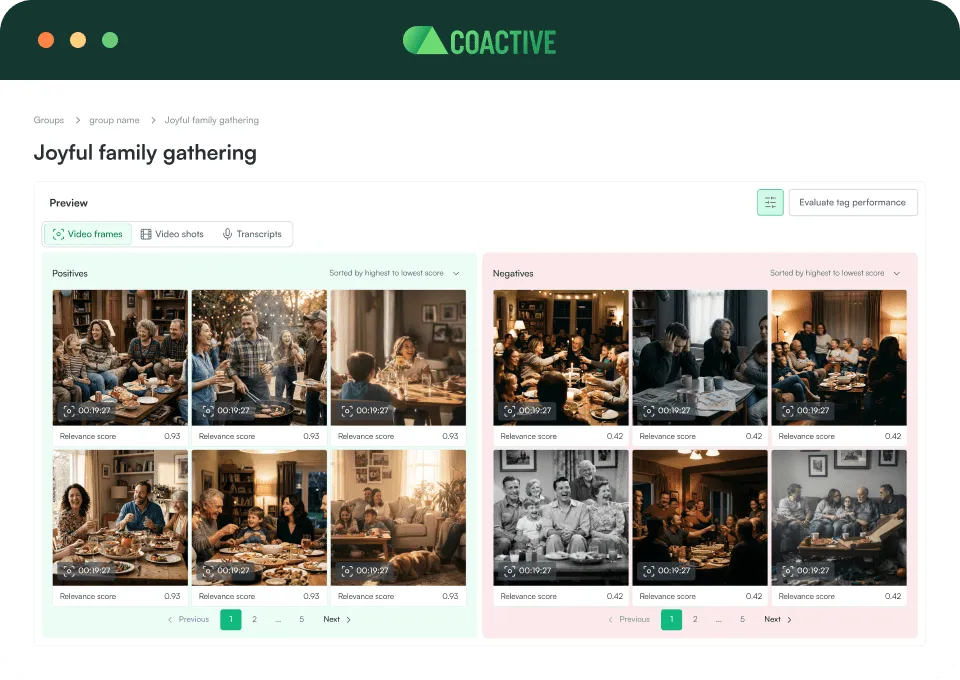
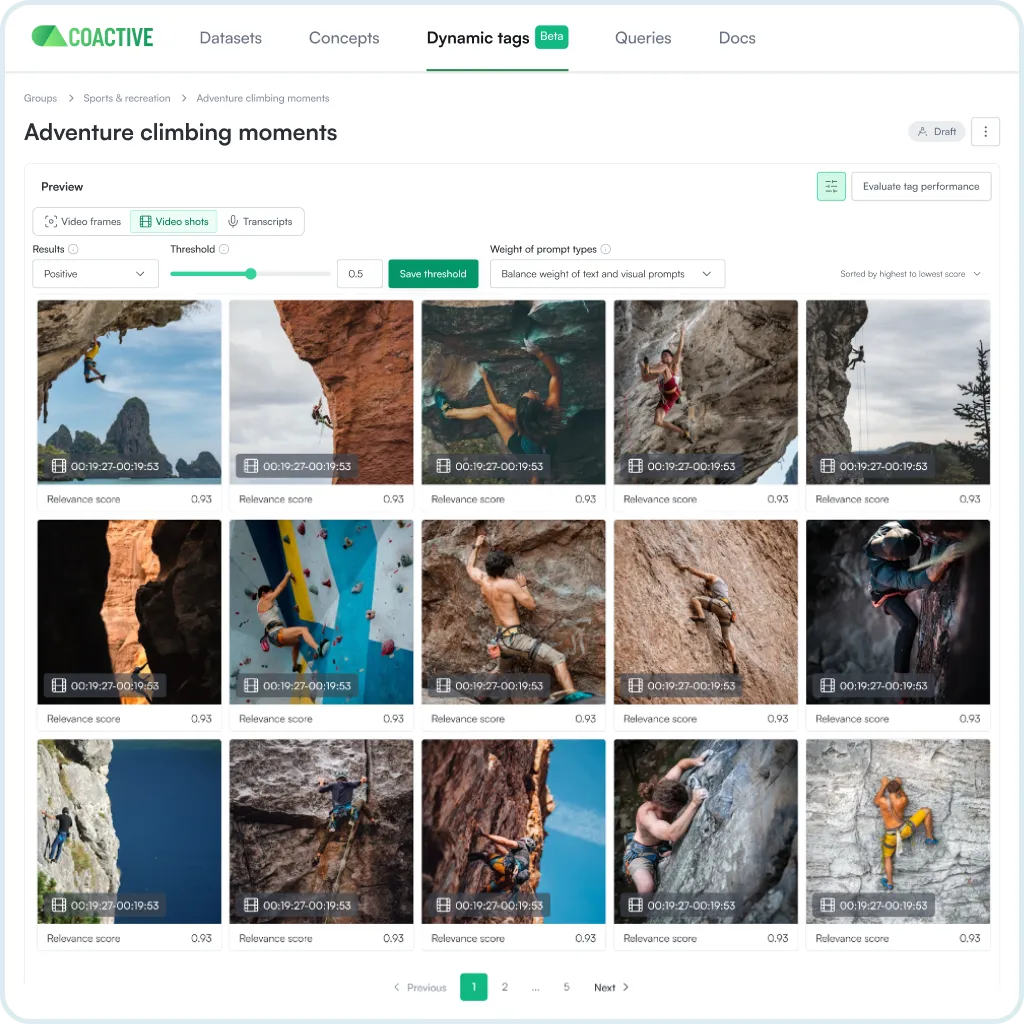
The platform returns a stratified sample of positives and negatives across your library. You see exactly which moments the system considers a match and which it does not.
Adjust the confidence threshold in real time. Switch between visual, shot, and transcript views. Verify what qualifies before you commit.
When you're ready, deploy.Publish your tags and score your full content library. Results land in structured, SQL-queryable tables ready for analysis, export, or activation through Context Studio.
Step 3: Refine
Add positive prompts to pull in more of what you want. Add negative prompts to exclude what you don't. Mark individual moments as correct or incorrect. Leverage LLM-generated prompt suggestions for abstract or hard-to-describe concepts. The model learns from your feedback without retraining, updating scores in real time.
The result is a custom taxonomy that belongs to you: queryable at any time, portable across datasets, and ready to power every downstream application.
When you're ready, deploy.Publish your tags and score your full content library. Results land in structured, SQL-queryable tables ready for analysis, export, or activation through Context Studio.
Intelligence That Travels With Your Content
Dynamic Tags powers all downstream apps & workflows
Context Studio
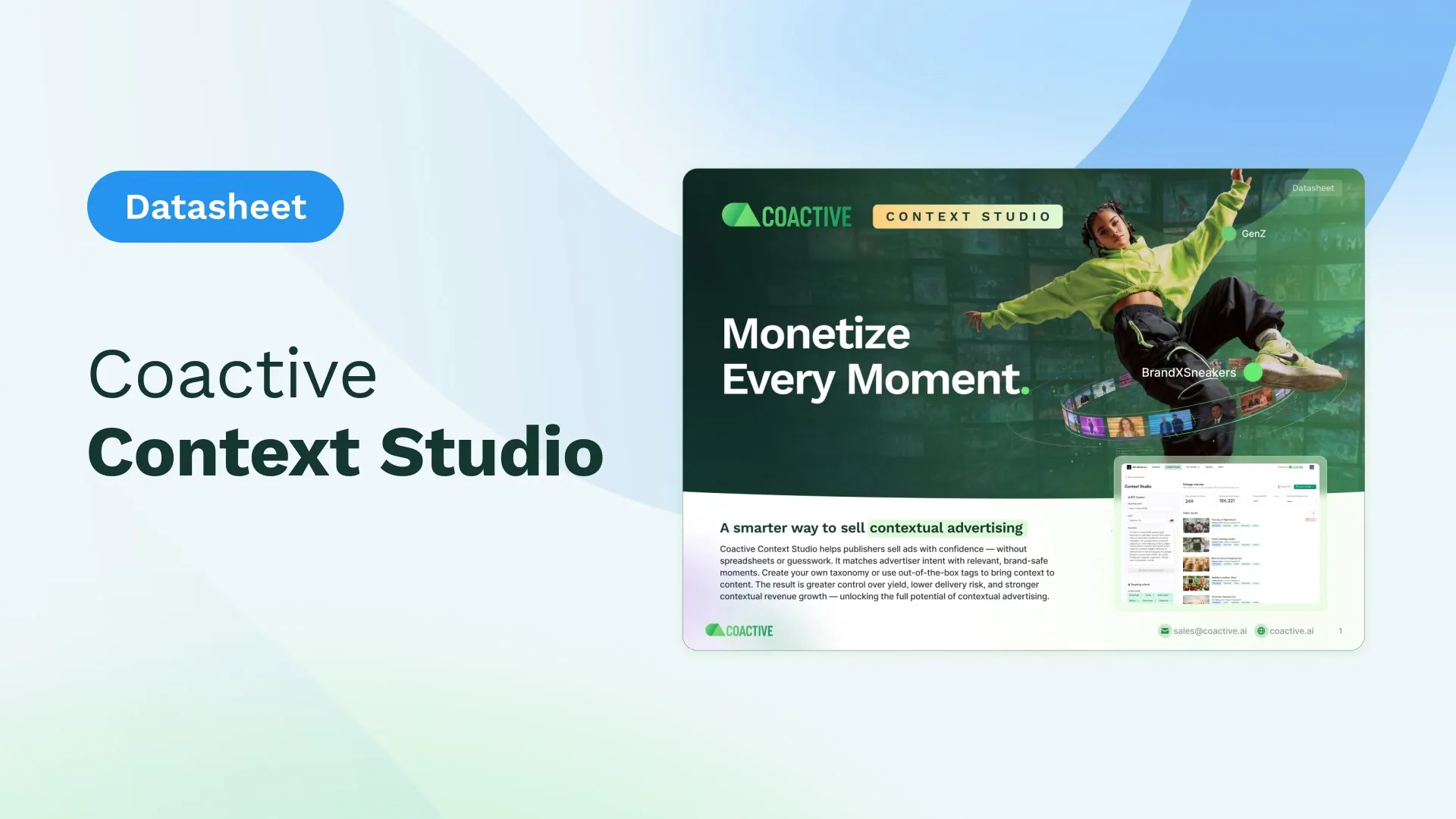
Dynamic Tags are the building blocks of every Context Studio package. The tags you define and validate in the platform flow directly into advertiser-ready targeting packages.
Every tag score, at every level of your content hierarchy, is immediately queryable in SQL. Analyze tag distributions, compare performance across datasets, and build reports on your Contextual Intelligence.
Export tag scores and structured data to power external analytics environments, data warehouses, business intelligence tools, or custom applications through the API.
Other platforms classify content using their models and their taxonomy. You see results through someone else's lens and rely on their definitions of what content means. Dynamic Tags inverts that relationship. You define what matters. You teach the platform your language. The intelligence that results is defined by you, owned by you, and refined by you.
That is the difference between renting a taxonomy and owning your Contextual Intelligence.