

En cliquant sur « Accepter tous les cookies », vous acceptez le stockage de cookies sur votre appareil afin d'améliorer la navigation sur le site, d'analyser l'utilisation du site et de contribuer à nos efforts de marketing. Voir notre Politique de confidentialité pour de plus amples renseignements.

Contextual Doesn't Scale. Context at Scale.

Contextual Doesn't Scale. Context at Scale.

The language of media buying has been human, conceptual, and emotionally precise for years. The demand was never missing. The infrastructure to fulfill it was. Coactive scales context.

WHY IT NEVER WORKED

Three reasons why context never scaled

The demand was there. The technology wasn't. Here's exactly where the gap lived.

ADVERTISER INTENT

"Is WWE sports or entertainment? Find moments of female empowerment."

Advertisers write briefs in human language, nuanced, subjective, brand-specific. Every brand's definition of “WWE” or "female empowerment" is different. No standard taxonomy can capture it.
ADVERTISER INTENT

"Sports" or "Entertainment." Pick one.

IAB categories map genres, not intent. Standard taxonomies flatten nuance into buckets. The brief asked for a concept. The system returned a label.

Coactive: define any concept in plain language, per advertiser, per brief, at any level of nuance.

ADVERTISER INTENT

"We need a custom sustainability package, our taxonomy, cross-genre, brand-safe."

Advertisers want custom packages built around their brand guidelines, not a standard classification system. Custom was the only option. Custom didn't scale.
TIME TO BUILD CUSTOM

Months of manual tagging. An ML team. A result that was outdated on arrival.

Custom was possible in theory. In practice, by the time the package was ready, the campaign flight dates had passed.

Coactive: define, review, and iterate in minutes: AI-powered metadata for every team, not just ML.

ADVERTISER INTENT

"Show us exactly which moments qualify, and why, before we commit budget."

Buyers want scene-level transparency before the deal closes. They want to see the inventory, verify suitability, and understand why a moment qualifies, not trust a label.
IMPOSSIBLE TO PROVE

"Trust us. It's in there somewhere."

Publishers know the content exists somewhere in their millions of minutes. They just can't prove to a buyer which moments qualify and why.

Coactive: scene-level proof, buyers see exactly what qualifies before committing a dollar.

Case Study
Customer

Turning context into sellable moments.

When NBCUniversal received a brief from a leading luxury brand requiring environmentally conscious content with strict brand safety standards, they turned to Coactive. Working together, they indexed 9 million minutes of content, built the package live in front of the customer, and won the deal — because the advertiser could see exactly which scenes qualified and why before committing a single dollar of budget. Coactive transformed NBCU's advertiser-defined concepts into scalable, trafficable contextual products, giving their Ad Sales team the ability to package brand-specific context at the moment level, across their entire library, with no manual tagging or workflow disruption.
Campaign performance
+27%
Higher creative enjoyment
vs. baseline
+14%
Content enhanced brand's message
Agreement with statement
+10%
Unaided brand awareness
vs. baseline
+38%
Brand perceived as environmentally responsible
Perception increase
+56%
Search engagement
vs. competitive streaming
7x
More website visits
Retargeted viewers vs. unexposed

Powered by Coactive’s Multimodal Application Platform

Four reasons context amplifies every media strategy.

Contextual intelligence is an optimization layer that complement audience targeting & ensures your media plan delivers.

Amplify audience targeting performance

Deliver targeted content and adsReaching the right person in the right context outperforms audience targeting alone. A verified frequent flyer watching a crime drama is a fundamentally different interaction from that same person watching a travel documentary. Contextual alignment ensures the right person is reached in the right mindset. Publishers who deliver both command meaningful CPM premiums.

Learn more

Enrich identity with contextual signals

Ensure brand trust and safetyContent signals act as a proxy for interest and intent, often with greater accuracy than third-party data. A viewer watching a home renovation documentary at 9pm expresses an intent third-party segments may not capture. Platforms that understand content at scale can translate that into enriched audience signals, a data product with real value to direct and programmatic buyers.

Learn more

Durable in any signal environment

Content signals work in two directions: they enrich audience targeting when identity is available, and they substitute for it when audiences aren't addressable. Either way, they compound over time, a durable intelligence asset that grows more valuable as identity signals erode.

Learn more

Adds measurement and explainability

Moment-level suitability scoring and contextual metadata give buyers the explainability infrastructure to justify spend and demonstrate ROI beyond click-through rates alone. Join content signals with campaign data to understand which creative, content types, and environments drove outcomes, and why.

Learn more

"The market isn't missing demand for content intelligence. It's missing the infrastructure to scale it."

From: The Move to Contextual Advertising, Coactive Whitepaper, 2026

HOW TO TURN INTENT INTO TAGS

Bring context to content, in minutes.

No spreadsheets. No waiting weeks for a package the campaign has already moved on from.

Step 1: define
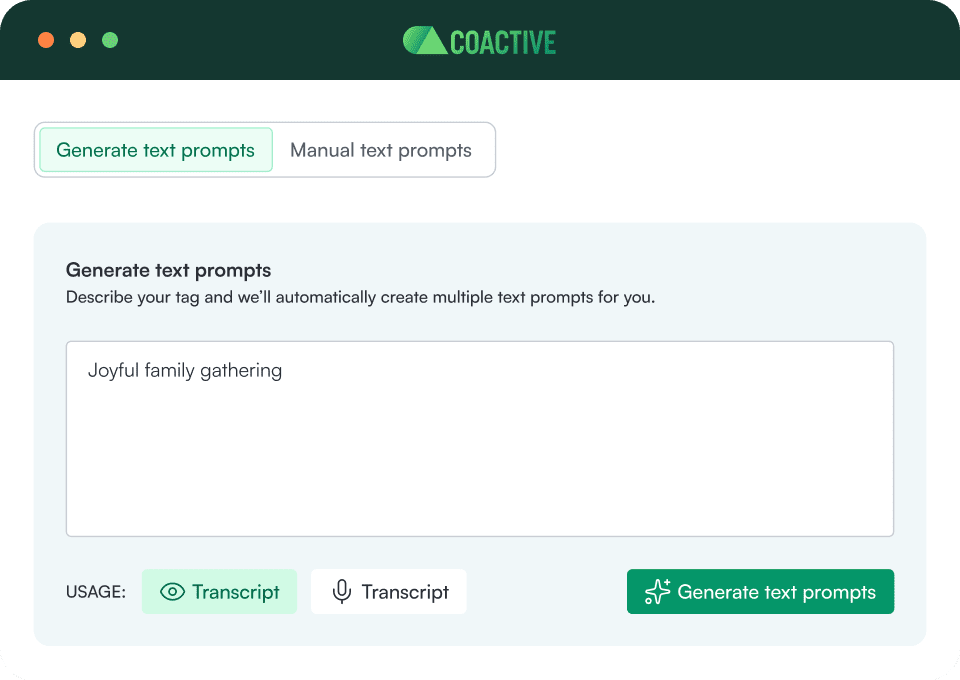
No taxonomy spreadsheets. Just type a concept the way a buyer would brief it, "joyful family gathering," "sustainable living moments," "high-energy outdoor adventure" and Coactive scores every moment in your library against your definition, at petabyte scale.

Every brand's definition of "happy family" is unique to its guidelines. A publisher can build one taxonomy for their catalog or a unique definition for each advertiser brief. The system learns each one.
Step 2: Review
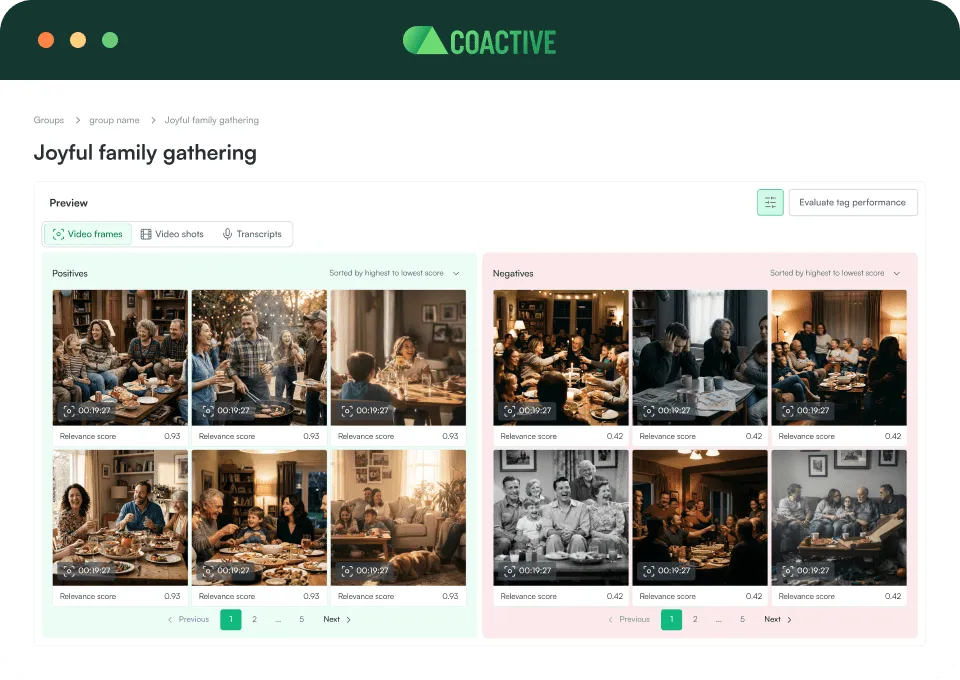
Coactive returns a stratified sample of positives and negatives across your library. You see exactly which scenes the system thinks qualify and which it flagged incorrectly with the option to edit the selections. Verify what's inside the package.

Adjust the confidence threshold in real time. 
Switch between frame, shot, and transcript views.
Step 3: iterate
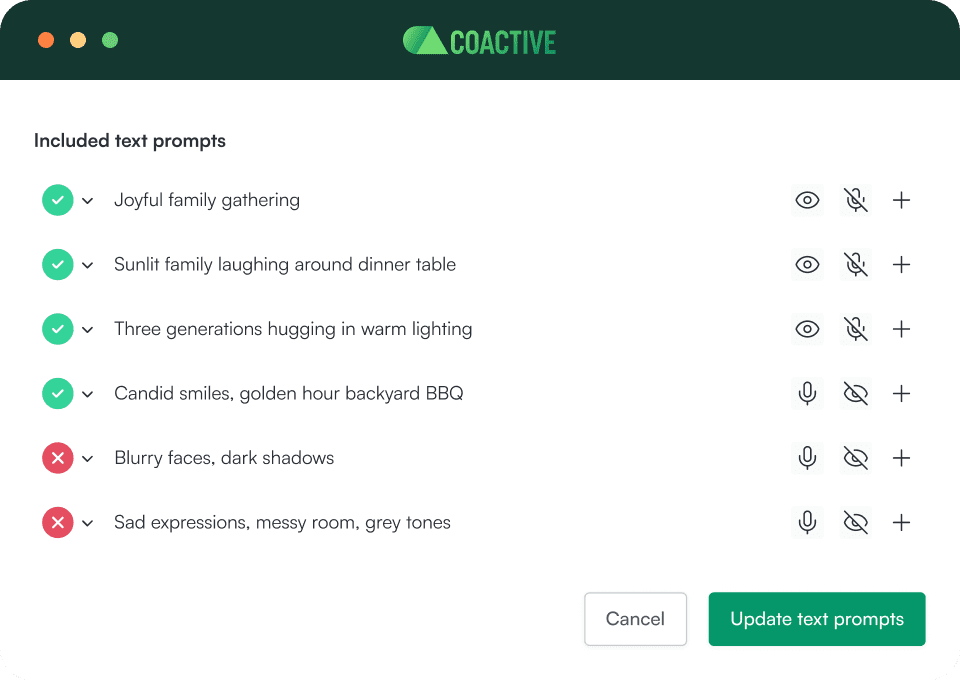
Add positive prompts to pull in more of what you want. Add negative prompts to exclude what you don't. Mark individual frames as correct or incorrect. The model learns from your feedback without retraining, updating scores in real time.

The result is a custom taxonomy that belongs to you, queryable at any time, applicable across every dataset, and ready to plug into your existing advertising stack.
Use Cases

Monetize every moment.

Six ways content intelligence turns your library into premium ad inventory.

Moment-level targeting

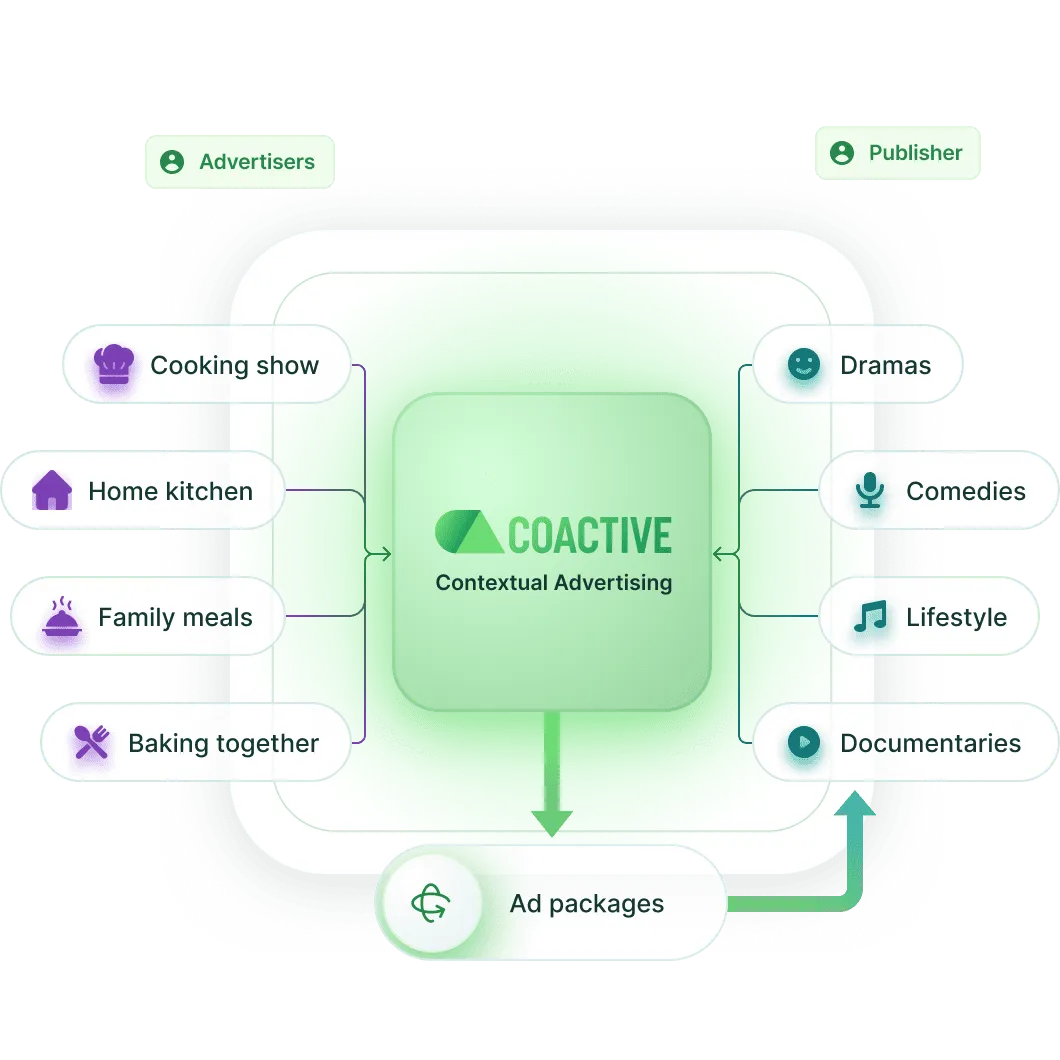
Instead of selling a "Cooking Show" genre placement, sell "Home Kitchen Scenes Featuring Family Meals", a package spanning dramas, comedies, documentaries, and lifestyle, unified by emotional context.
Power any ad format, such as pause ads, overlay ads, and informing ad breaks.

Example: Find every scene where a character cleans up a kitchen spill, not the show, the specific moment. Higher relevance, better recall, and premium value.
Live Targeting

AI monitors the live feed, identifying high-impact emotional moments and triggering contextually aligned ad pods instantly.

Example: Pinpoint a game-winning play in real time and place a beer commercial featuring fans celebrating.

Brand Safety

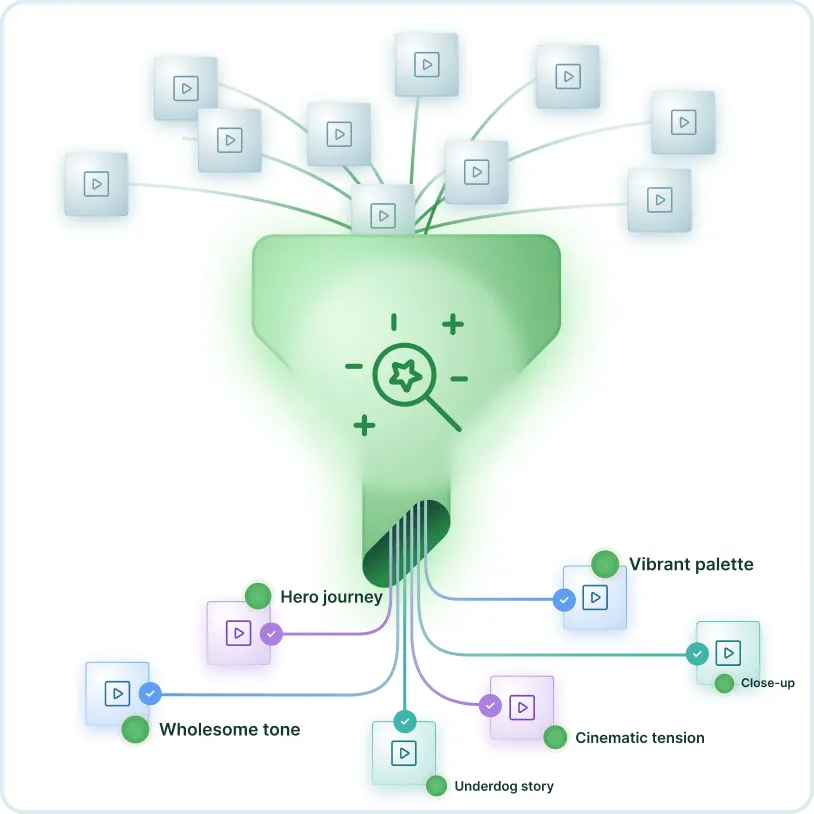
Scene-level analysis distinguishes a nature documentary about wildlife photography from a news segment about urban violence, unlocking inventory that buyers are incorrectly avoiding.

Example: A sports brand has blanket-excluded a news network and misses every sports recap, athlete profile, and game preview. Scene-level scoring identifies brand-safe, high-attention placements the brand actually wants.

Long-Tail Inventory

80% of a streaming catalog sits underpriced and underutilized because publishers can't prove what's inside. A sustainability package can now span documentaries, dramas, and lifestyle content as new inventory that was never previously on the same rate card.

Example: A sports brand has blanket-excluded a news network and misses every sports recap, athlete profile, and game preview. Scene-level scoring identifies brand-safe, high-attention placements the brand actually wants.
Creative Resonance

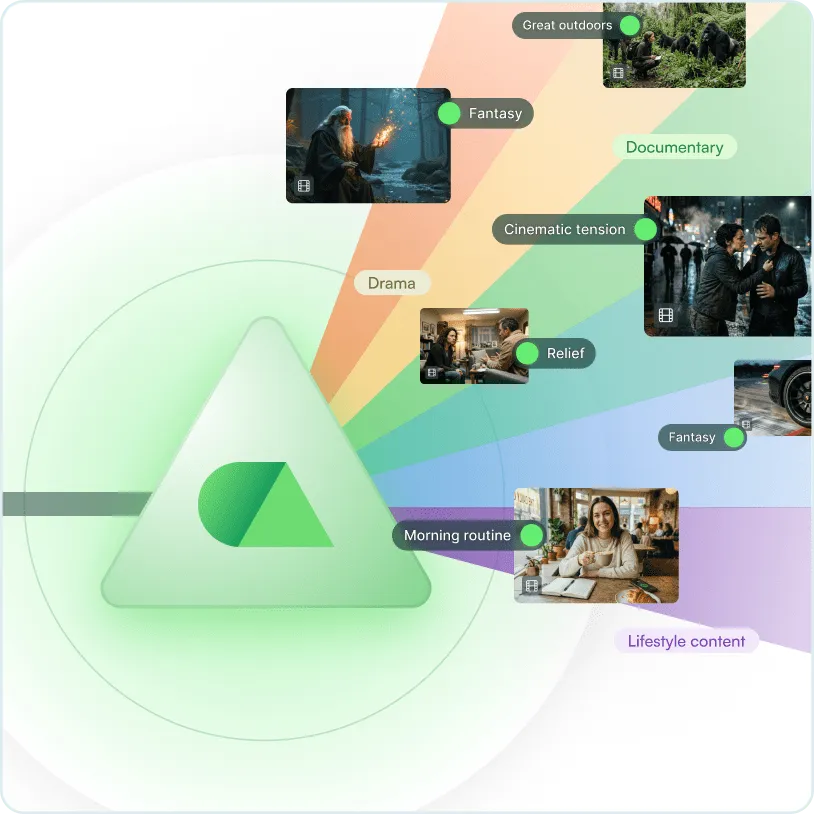
Analyze ad creative at the same depth as content including mood, visual composition, and narrative theme. Resonance becomes a planning input, not a measurement postmortem.

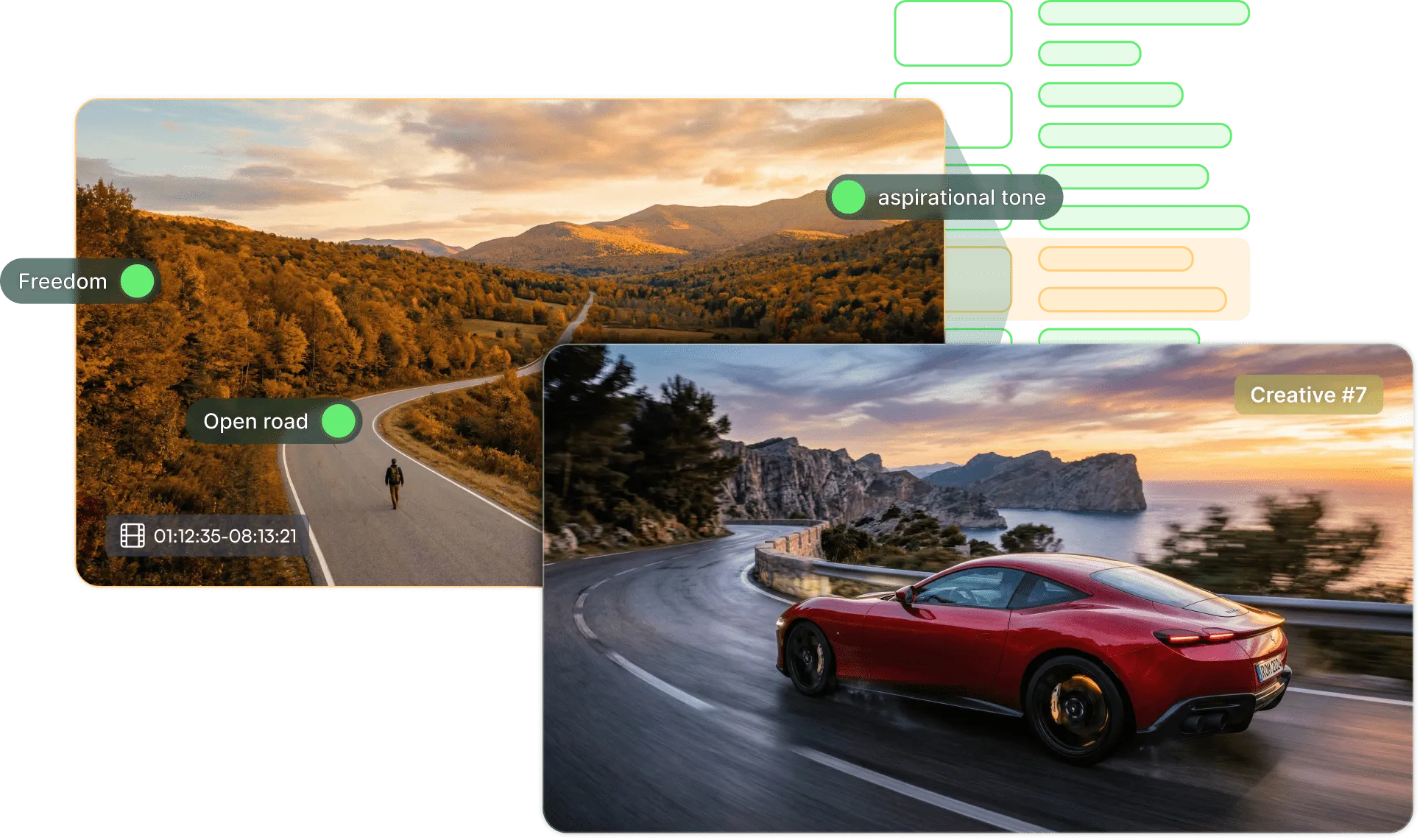
Example: A creative emphasizing open-road freedom lands differently in an adventure travel series than mid-sitcom.
Measurement

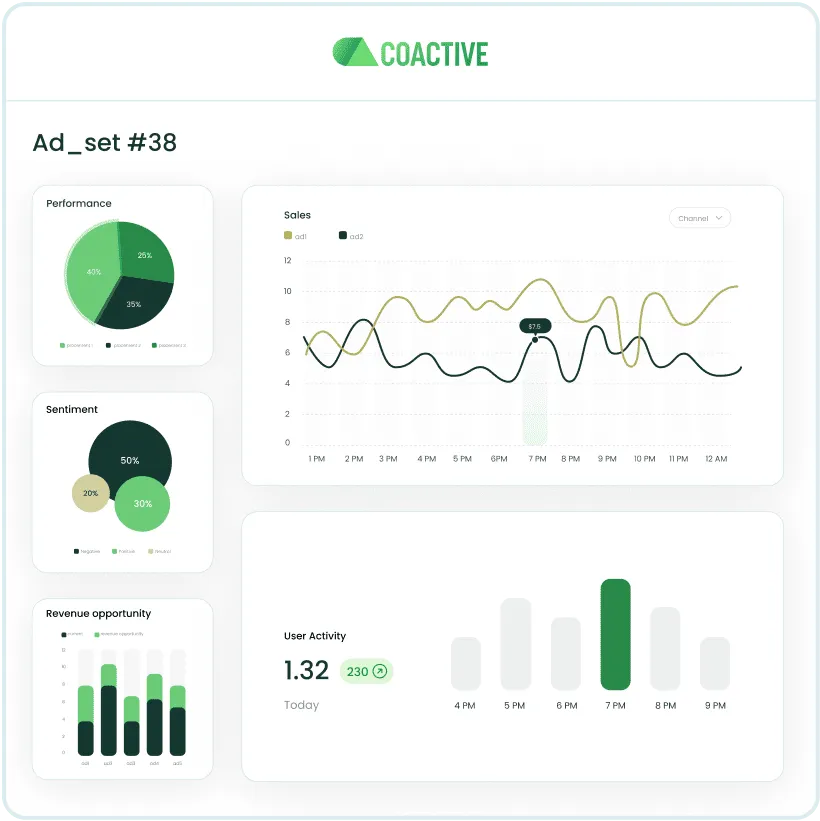
Join Coactive's content signals with your campaign data to understand which creative contexts, content types, and placement environments drove the outcomes that matter.

Example: Compare campaign lift across sports vs. entertainment programming. Identify which content attributes, such as warmth, energy level, and brand alignment score, correlate most strongly with unaided awareness or purchase intent.
ECOSYSTEM

Designed to augment, 
not replace.

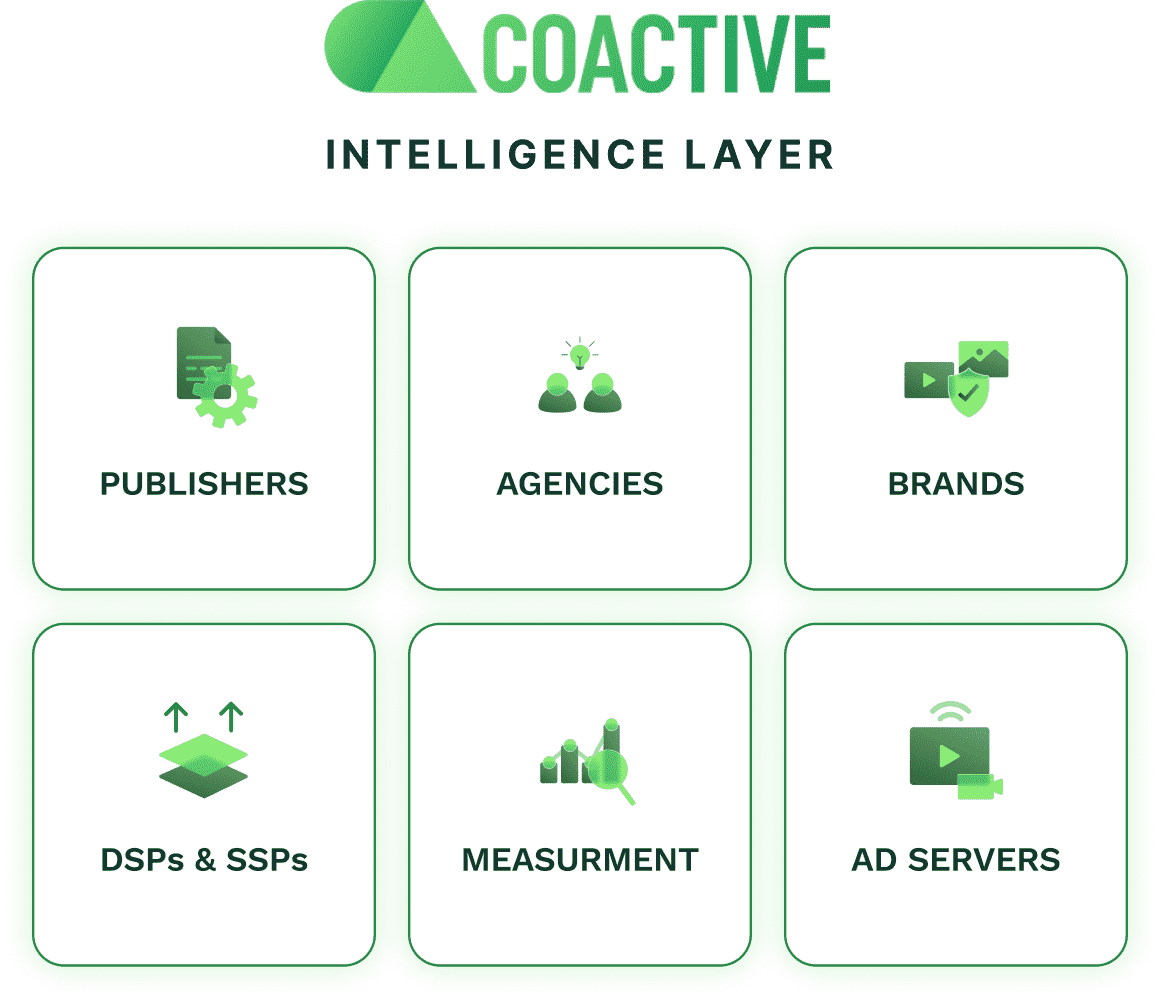
Coactive sits between content and commerce as a neutral intelligence layer, making your existing stack more valuable without asking you to rebuild it.

Publishers create faster, higher-yield packages

Agencies get inspectable, intent-aligned inventory

DSPs & SSPs receive enriched bidstream signals

Brands reach audiences in contextually aligned moments

Measurement companies unlock contextual attribution