

Powered by coactive
Swap digital identifiers for first-party CTV packages
Reach the right viewers by translating what they watch into scalable, sellable audience-aligned inventory.



The Challenge
Targeting categories haven't changed.
The signals have.
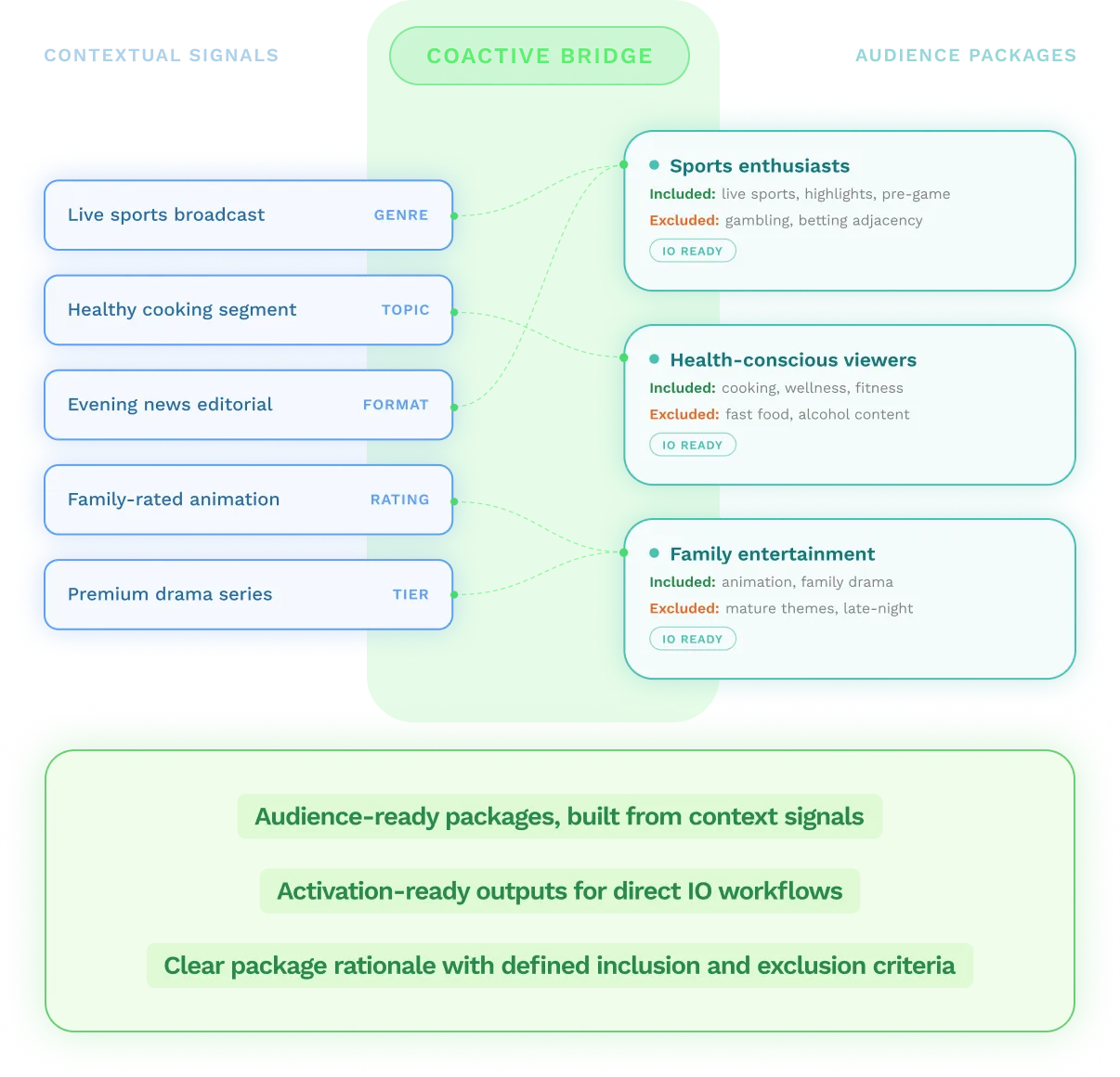
Advertisers still plan and buy toward audience goals, traits, and characteristics: new parents, health-conscious shoppers, eco-minded households. But deterministic targeting is increasingly constrained, inconsistent across environments, and harder to scale on CTV due to signal loss and privacy constraints. What's missing is a way to use context as a proxy for audience, turning advertiser goals into scalable, sellable supply from the content you already own.
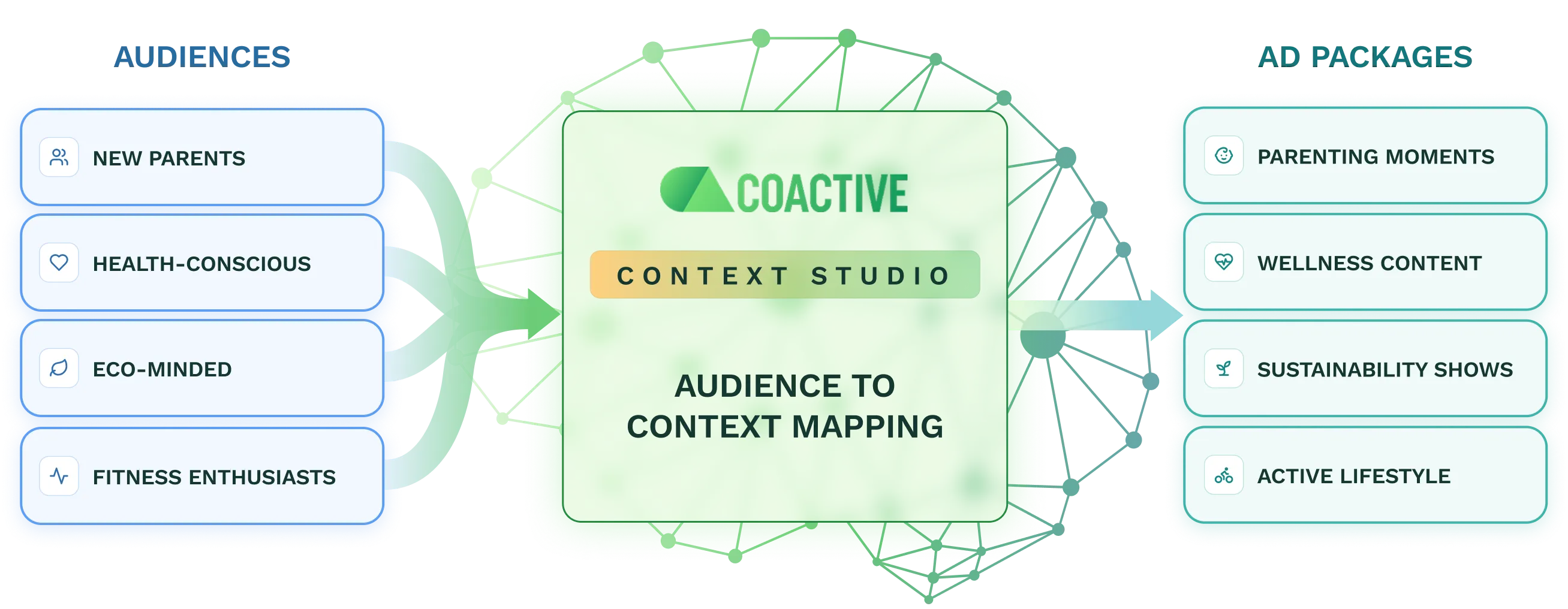
What’s missing:A way to use context as a proxy for audience to turn advertiser goals into scalable, sellable supply from the content you already own.
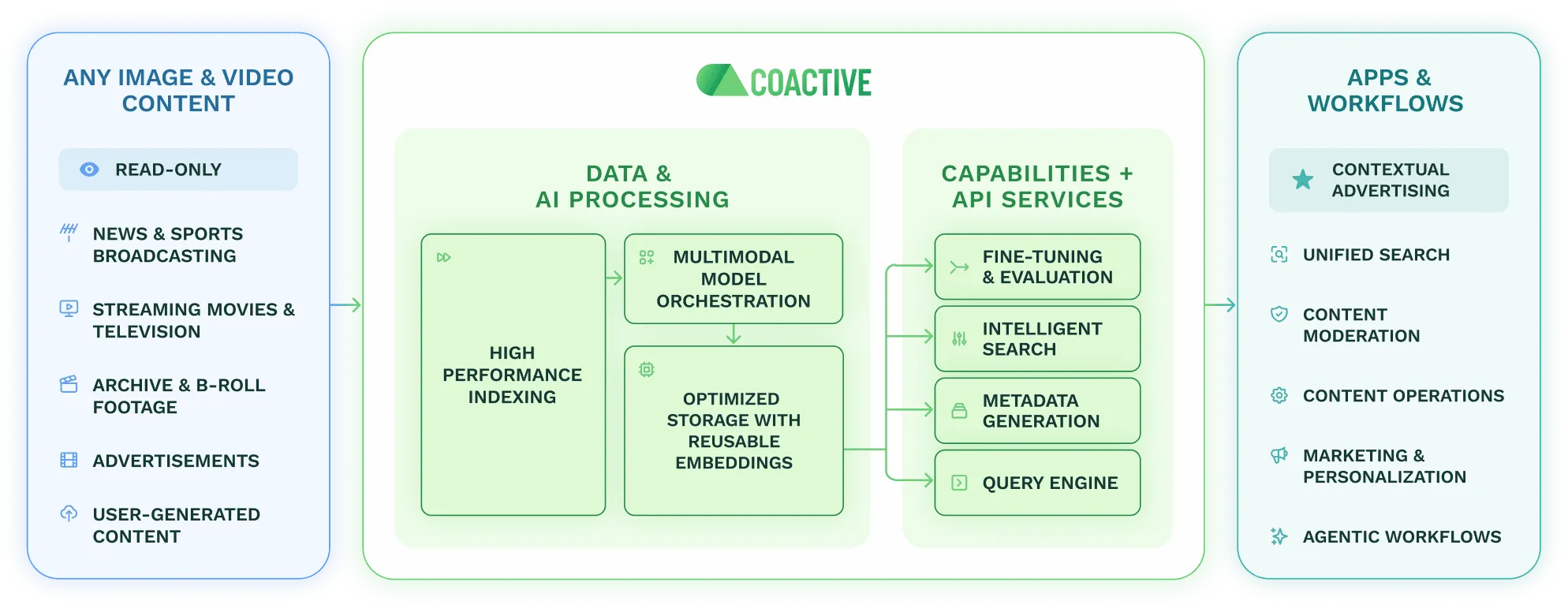
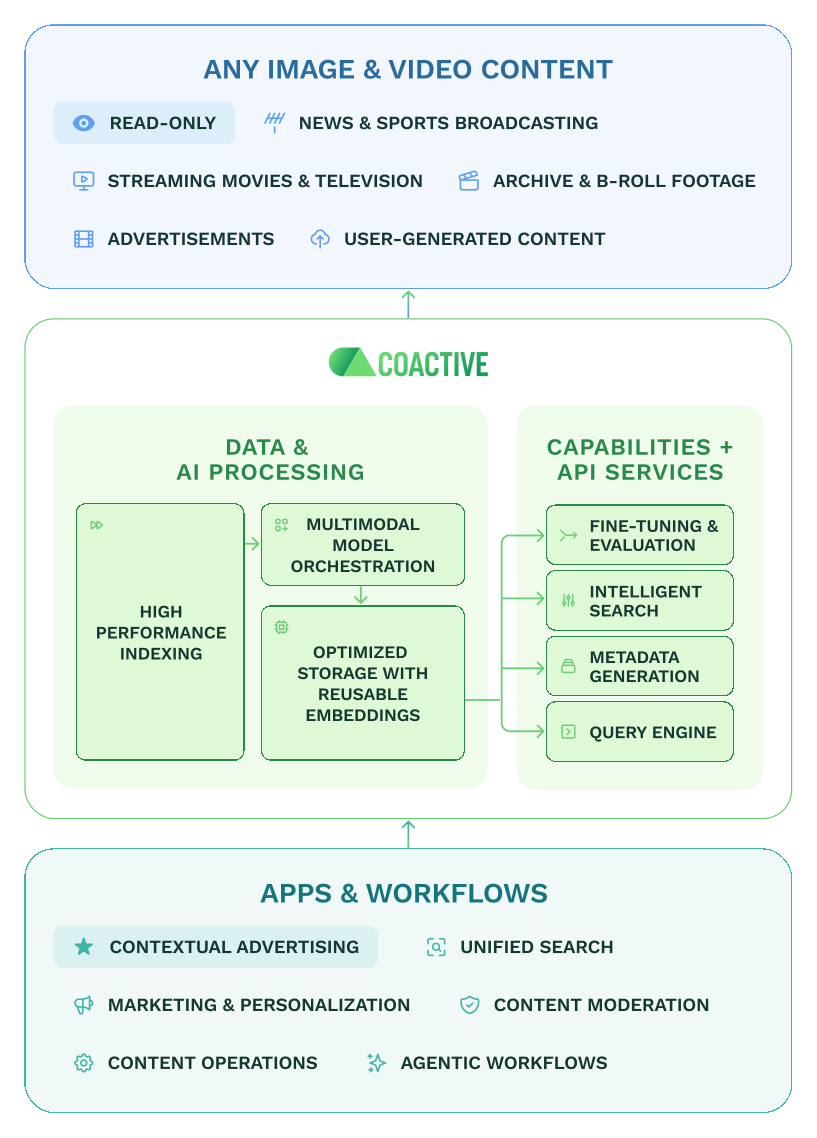
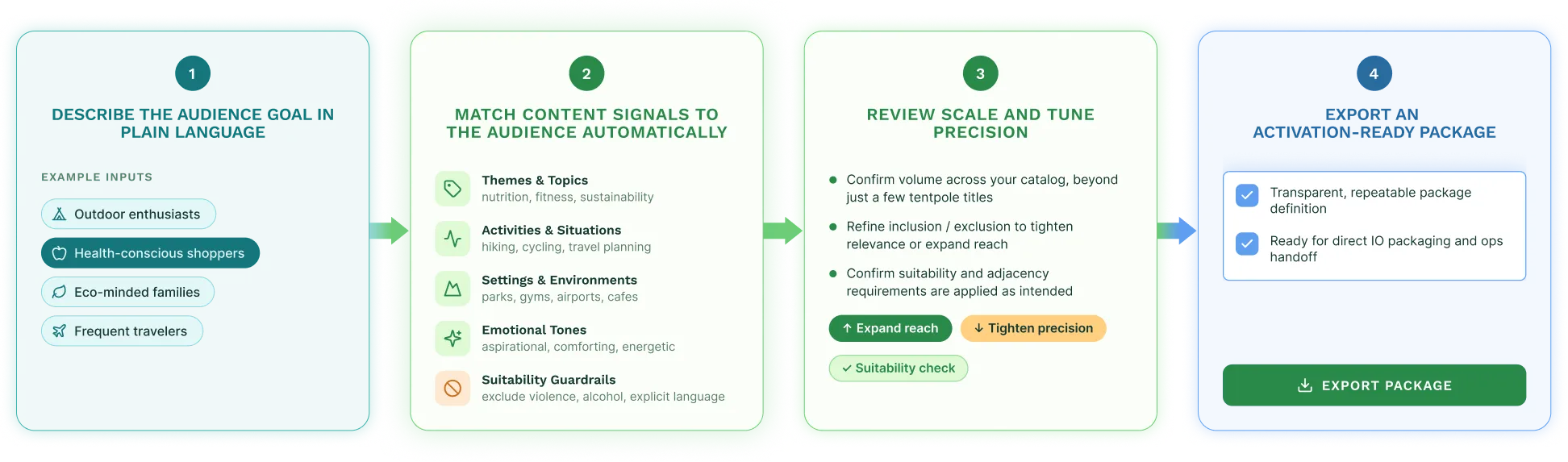
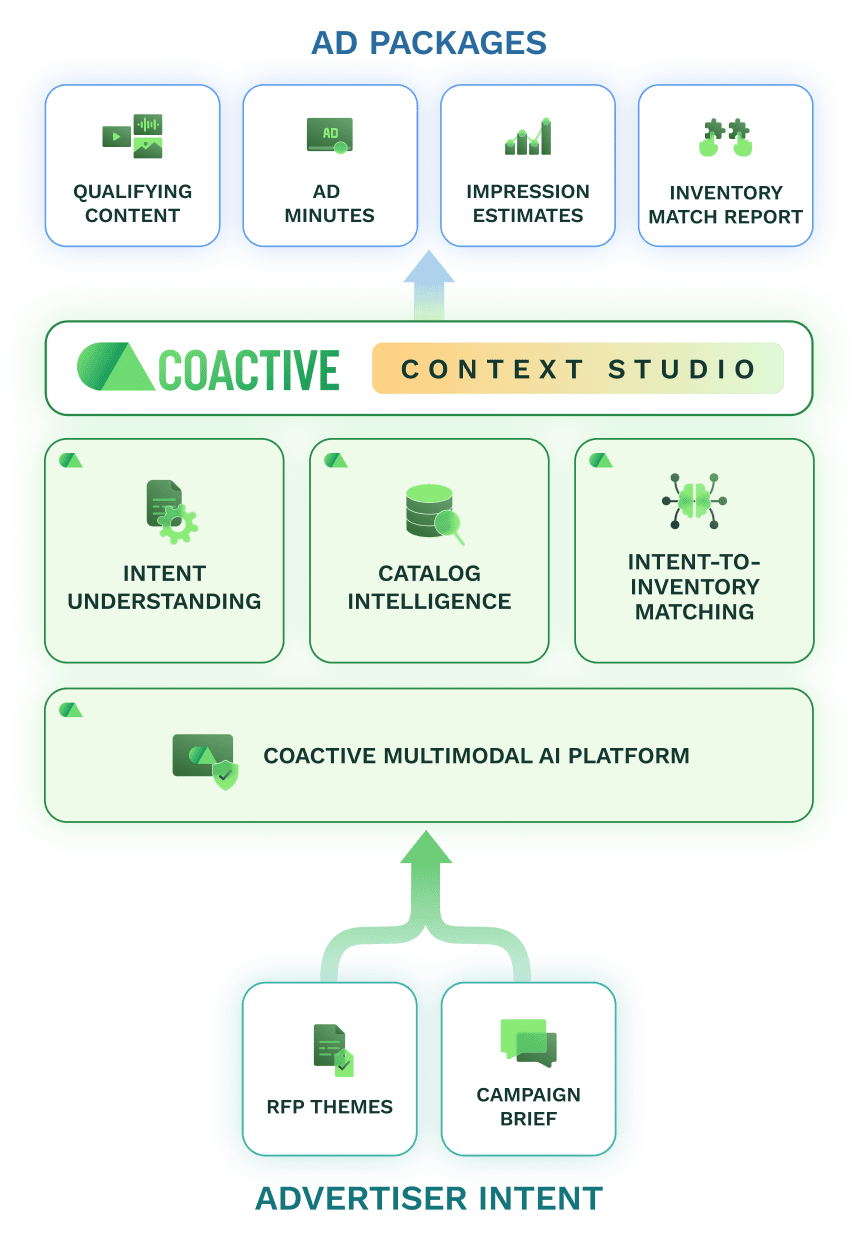
Context Studio turns audience objectives into contextual definitions that correlate with who's watching, then packages those moments across your catalog into inventory that can be sold, explained, and activated.
HOW IT WORKS
Build audience-aligned packages in
Context Studio.
Capture the audience objective once, translate it into content-based proxies, and export a package your teams can activate in direct IO workflows. For example, you’re planning to pitch a new ad placement campaign for a premium athleisure wear brand that is made from sustainable, all-seasons wool.
WHY THIS IS DIFFERENT
Why Context Studio
works for audience targeting.
Preserves advertiser objectives while staying privacy-resilient
You’re selling toward audience targeting using contextual signals without relying on third-party IDs.
Scales beyond static categories
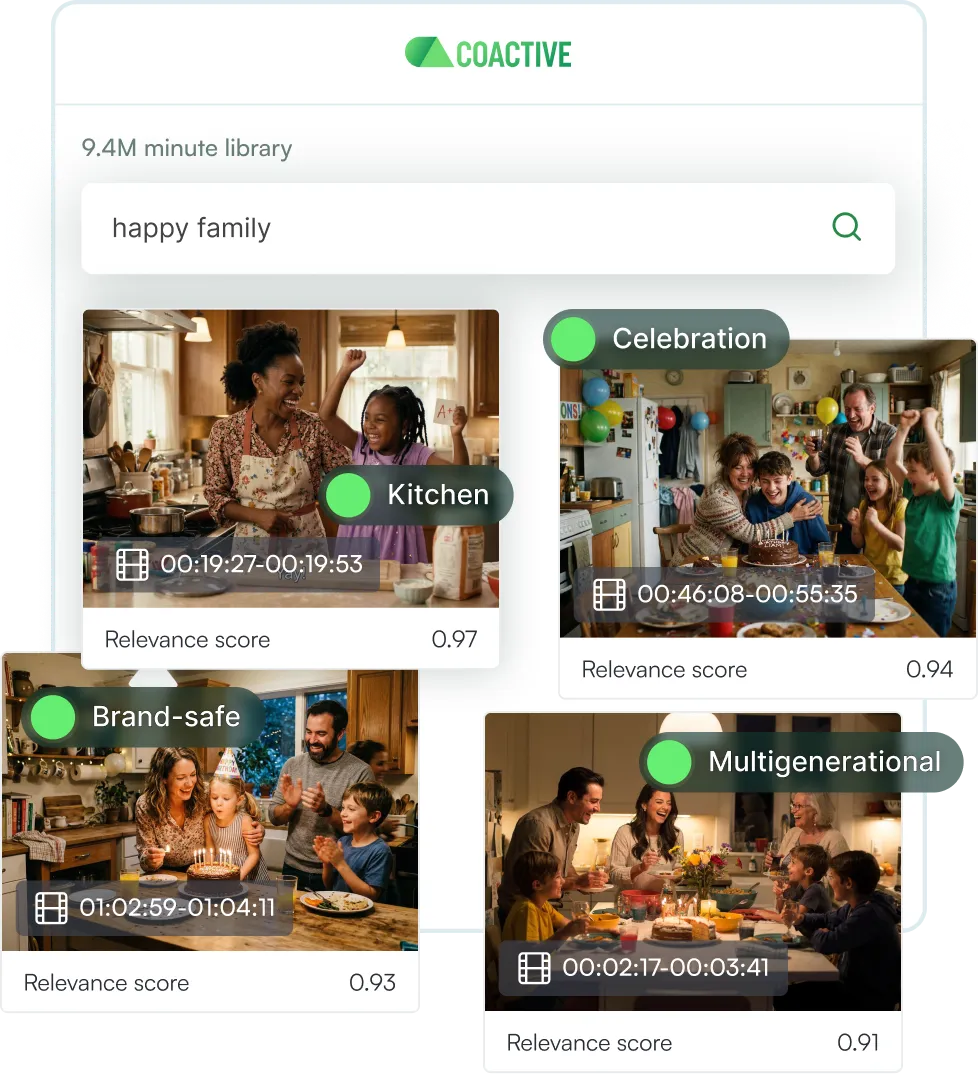
Move past genre and coarse metadata into moment-level signals that more closely reflect audience mindset.
Explainable and governable
Every package comes with clear criteria so sales can defend it, ops can trust it, and advertisers can understand what they’re buying.
It fits direct IO workflows
Built for packaging, pricing, and activation.
Benefits
Win more Deals.
Deliver better outcomes.
Improved campaign outcomes when alignment improves (brand lift, attention, engagement).
Higher win rates on proposals: packages with clear rationale are easier for buyers to say yes to.
Shorter RFP turnaround: audience-aligned packages can be built and submitted faster.
More sellable inventory: moment-level discovery surfaces supply that static categories miss.
Stronger advertiser confidence: when buyers understand what they're getting, deals close faster and renew more easily.
.png)